
Failure Is Feedback, Not Your Identity
Saji Gopalan
September 12, 2026
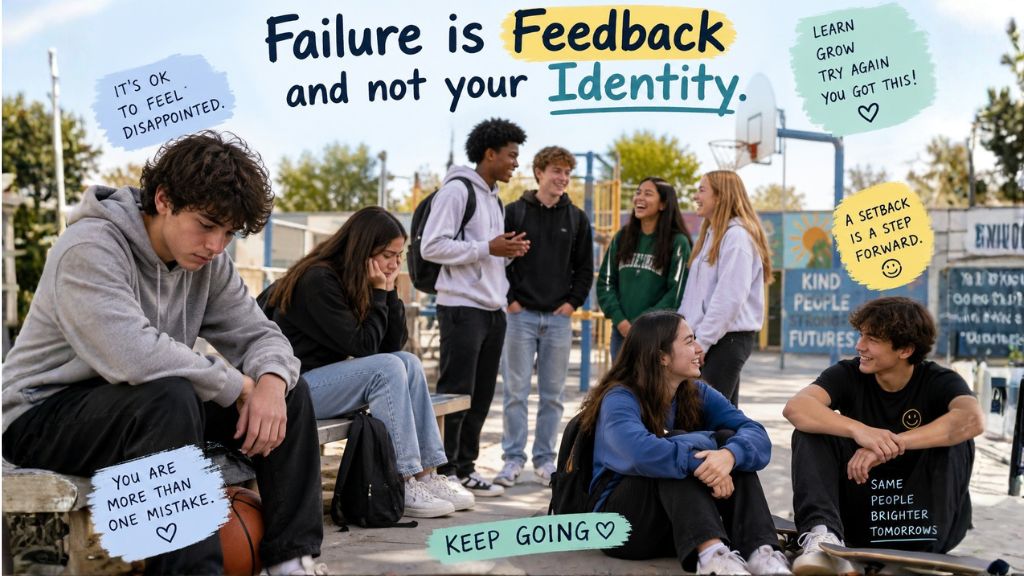

What if failing a test, losing a competition, not making the team, or being rejected from an opportunity didn’t mean you failed as a person?
Ancient Indian wisdom offers a remarkably modern answer: your outcome does not define you. Your actions, learning, and character do.
The Bhagavad Gita puts it beautifully:
“You have a right to action alone, never to its fruits.”
Krishna does not tell Arjuna to stop caring about the outcome. Instead, he asks him to focus on what is within his control – his effort, preparation, choices, and actions.
The very next verse takes the idea further:
“Remain equal in success and failure; this equanimity is called yoga.”
For today’s youth, this is powerful.
A disappointing grade does not mean “I am not smart.”
Losing a competition does not mean “I am a loser.”
Rejection does not mean “I am not good enough.”
It means: something happened. Now, what can I learn from it?
The Path Is Not Supposed to Be Easy
The Katha Upanishad gives young people another timeless message:
“Arise! Awake! … The path is sharp like the edge of a razor.”
Growth rarely happens on a perfectly smooth path. Challenges test our patience, discipline, courage, and the ability to adapt.
A setback can therefore become a teacher.
Instead of asking, “Why did this happen to me?”, we can learn to ask:
“What is this experience teaching me?”
The Arthashastra of Chanakya expresses the importance of purposeful action in a remarkably simple statement:
“The root of wealth is activity.”
The broader lesson is equally relevant today: wishing for success is not enough. We need thoughtful planning, persistent effort, and the ability to respond intelligently when circumstances change.
That is especially important for young people growing up in a world obsessed with achievement.
Grades. Trophies. College admissions. Followers. Awards. Rankings.
When achievement becomes the measure of identity, failure can feel devastating.
Ancient wisdom offers another way.
Don’t ask only, “Did I win?”
Ask:
- What did I learn?
- What could I do differently?
- What strength did I discover?
- What will I try next?
- What kind of person am I becoming through this experience?
Success can give you confidence. Failure can give you wisdom.
So the next time something doesn’t go your way, pause before labeling yourself.
You are not your grade.
You are not your rejection.
You are not your mistake.
You are the person who gets to learn, grow, and choose what comes next.
And perhaps that is one of the most timeless lessons ancient Indian wisdom can offer the next generation:
Don’t let a temporary outcome become a permanent definition of who you are.
“Fail Forward, Learn, Grow, Rise.”
